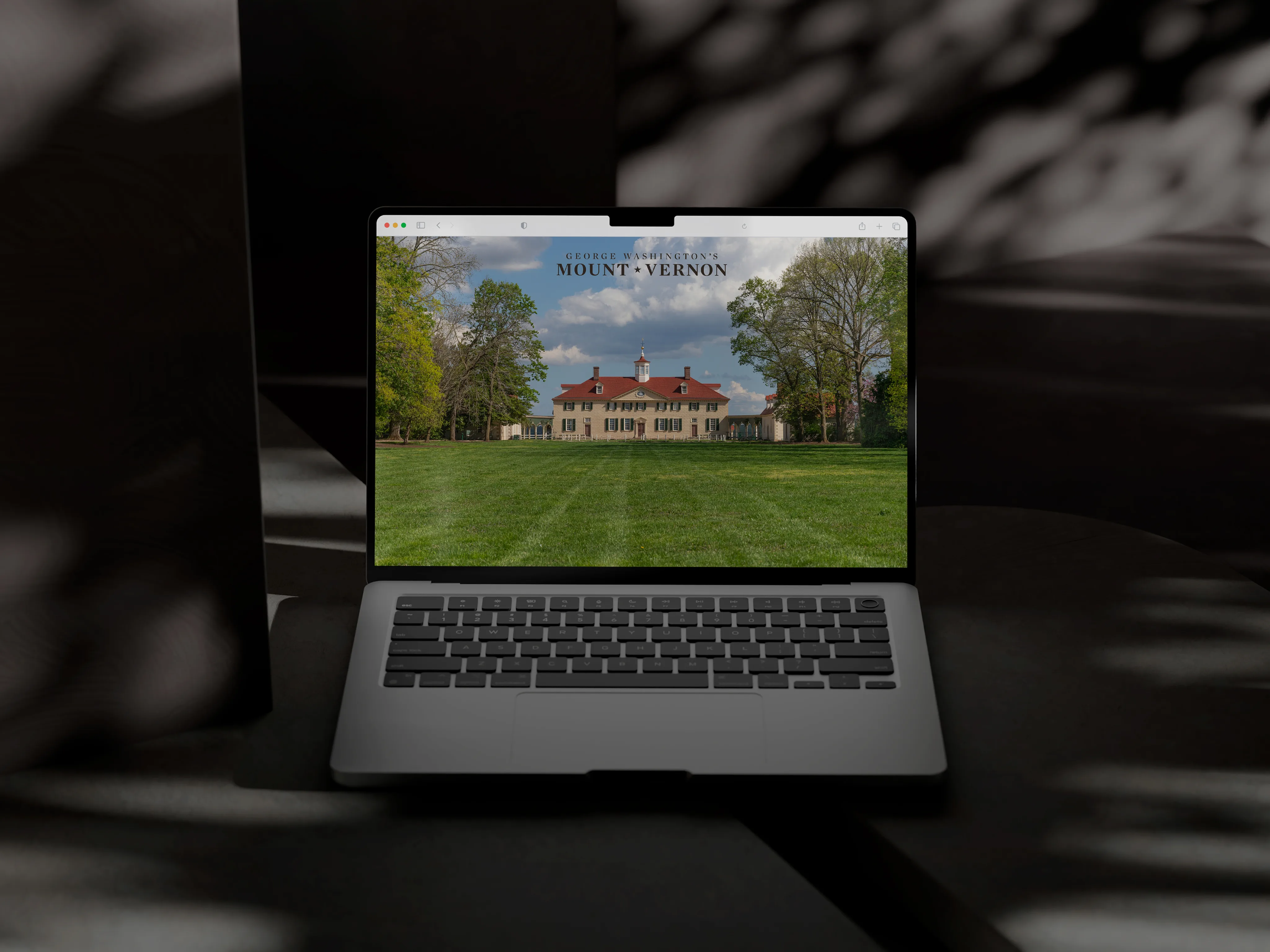
George Washington’s Mount Vernon is more than a historic site. It’s a complex organization where multilingual teams across departments depend on clear, shared information to keep daily work moving. Its intranet was meant to support that need, but became difficult to use, leading employees to stop relying on it. This project focused on rebuilding that foundation with a clear, dependable internal website, defined ownership, and secure access. An AI-powered assistant was also introduced to help employees find answers more quickly. Today, the intranet serves as a trusted starting point for the workday, supporting onboarding and reducing everyday friction.
Client profile
For an organization the size and complexity of George Washington’s Mount Vernon, internal information is just as mission-critical as public-facing communication.
Over time, Mount Vernon’s intranet, built on an outdated CMS, had become difficult to use, unreliable, and largely ignored. Employees couldn’t depend on it as a daily resource: partly because of frequent downtime caused by a fragile custom authentication setup, and partly because the content itself lacked structure, consistency, and clear ownership.
As a result, staff relied on workarounds:
- Email newsletters that were quickly deleted
- Tribal knowledge passed verbally
- Scattered documents stored across systems
- Repeated questions to IT, HR, and Operations
This created friction for everyone, but especially for new hires, who had no single place to learn how Mount Vernon operates, where to find essential tools, or which department is responsible for what.
Discovery phase and project goals
Discovery conversations revealed that the intranet wasn’t failing due to missing features, but because employees did not trust it as a reliable place to find information. Navigation was inconsistent, content was difficult to locate, and over time, staff stopped using the site altogether.
Mount Vernon needed an internal website that:
- Provided consistent, secure access
- Made information easy to find and navigate
- Served as a single reference point for internal guidance
- Supported onboarding for new employees
- Reduced repeated emails and ad-hoc questions
- Gave departments clear ownership of their content
- Remained simple enough to stay up to date
The intranet was never intended to be a document repository or a replacement for departmental drives. Instead, it needed to function as a single source of truth: a dependable internal handbook employees could open at the start of the day and trust to guide them to the right information, systems, and people.
Solution
The solution addressed three closely related areas: how internal information is structured and maintained, how employees find answers when they don’t know where to look, and how access and responsibilities are managed across the organization. We built a new intranet to establish a clear departmental structure and ownership, introduced an internal AI chatbot to support faster access to information, and implemented a reliable access and role model to ensure consistent use across teams.
A stable foundation aligned with Mount Vernon’s operations
We built a new intranet on Drupal CMS, following the same platform approach established during our work on Mount Vernon’s public website. This ensured technical consistency across systems and removed the limitations of the legacy CMS, making long-term support simpler and more predictable.
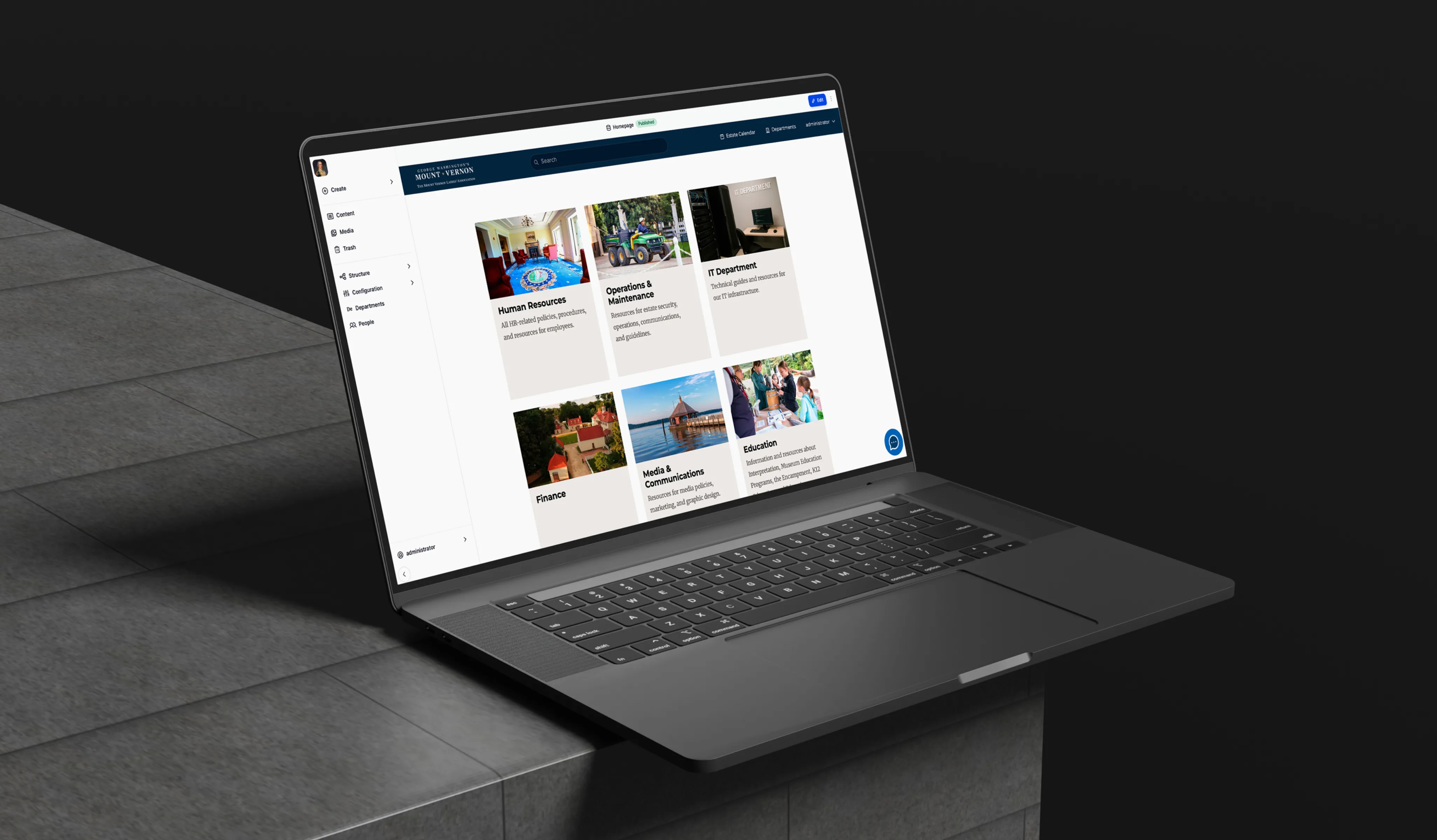
The intranet is organized around departments, similar to the way employees naturally look for information. The homepage presents department sections clearly. Within each department, consistent navigation patterns help employees move through longer content without confusion.
The intranet also includes an embedded estate calendar, allowing employees to view upcoming events and key dates directly within the internal website, without duplicating data or managing a separate system. Supporting features, such as restoring deleted pages, make the intranet safer and easier to maintain.
AI-powered internal assistant
To further reduce friction in finding information, we built a fully integrated AI chatbot directly into the intranet. The assistant is powered by AWS Bedrock and uses Anthropic’s Claude Haiku 4.5 large language model (LLM). Its knowledge base is built from two primary sources:
- An AWS S3-backed repository containing internal PDF documents
- A custom data source populated directly from Drupal content
We developed a custom Drupal module that securely extracts, synchronizes, and indexes intranet content into a separate knowledge base used by the AI agent. This ensures the assistant responds based only on approved internal information and stays in sync as content is updated.
The result is an AI assistant that helps employees get direct answers to common questions, including policies, procedures, contacts, and operational details, without needing to navigate multiple pages or documents.
Reliable access and clear responsibility
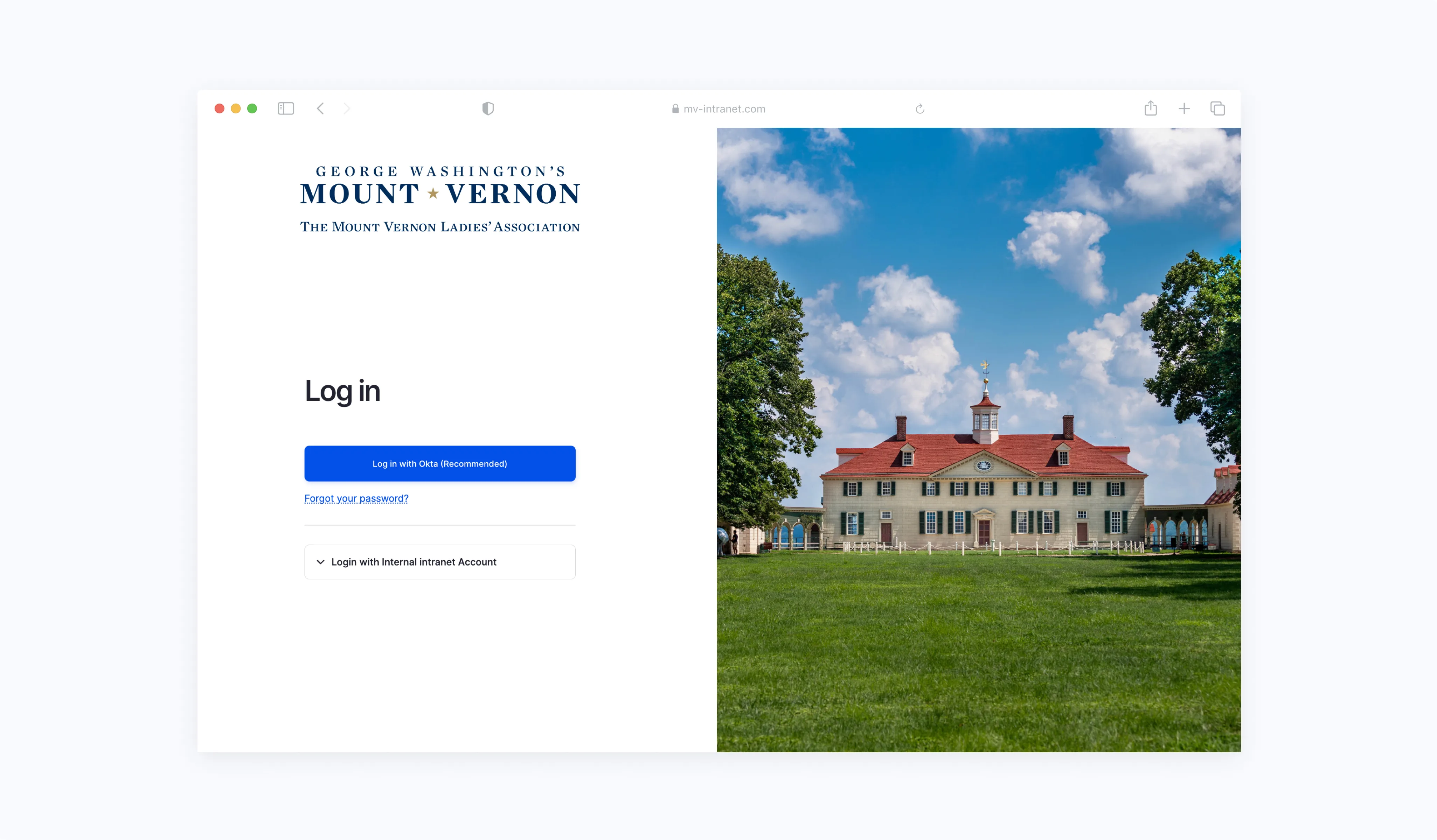
The intranet integrates with Okta single sign-on, replacing the fragile, IP-based authentication used previously. Employees can now access the intranet securely from anywhere, without VPNs or special conditions.
Content ownership follows a straightforward model:
Admins manage the entire site and all pages
Editors manage content for their department
Employees can access all information
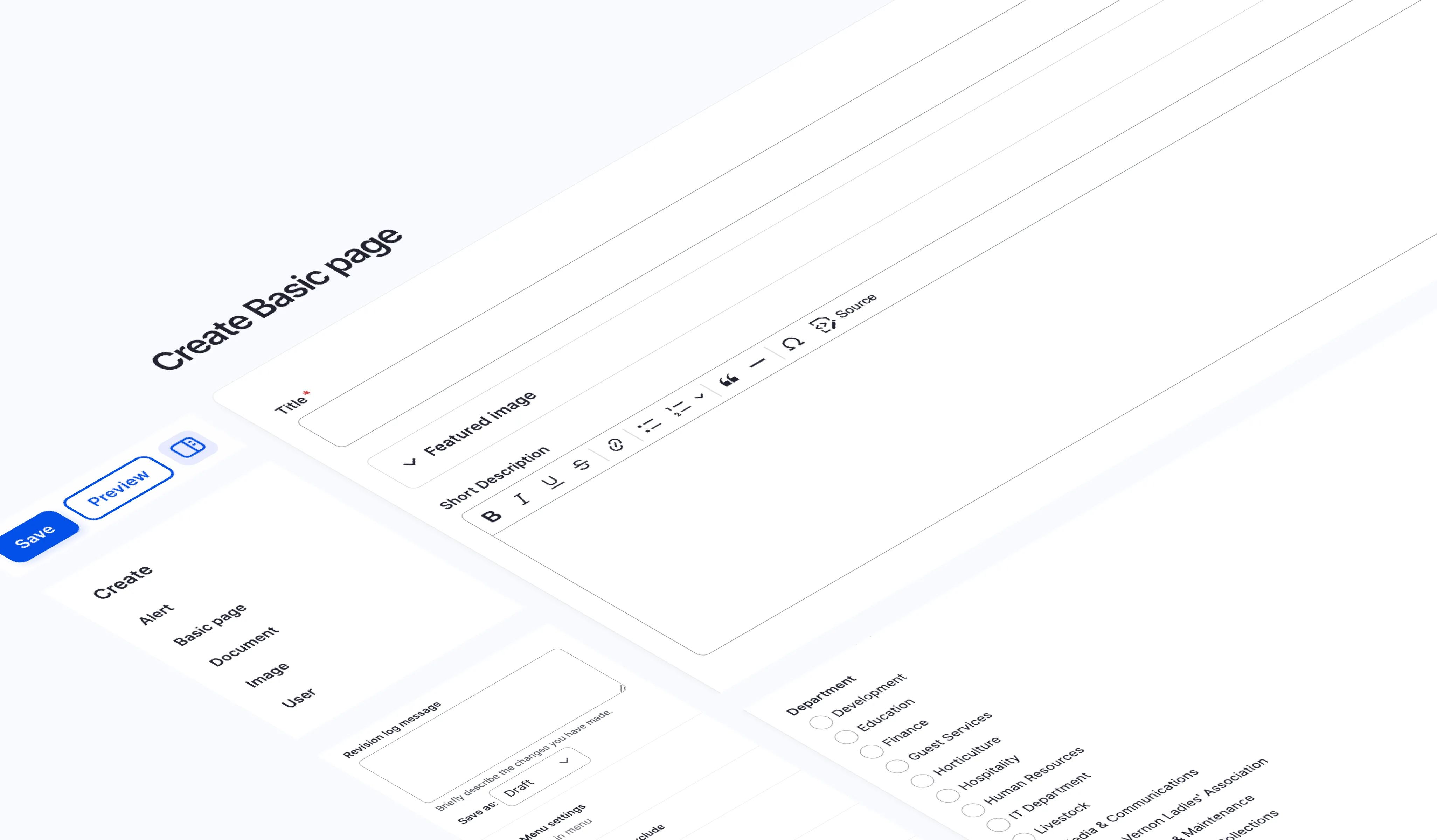
Content management remains lightweight, using a simple draft-to-publish workflow and two core content types for departmental pages and organization-wide alerts.
Departments maintain their own sections, while Marketing and Communications retain visibility across the intranet. Role-switching allows admins to review content as regular employees, helping ensure pages are clear and usable before publication.
Results
The new intranet gave Mount Vernon a clear and reliable internal website that fits the way the organization operates. It has become the default starting point for the workday: with the intranet set as the home page on staff computers and used to surface the most relevant updates and information. Observed and early measurable outcomes include:
- Elimination of access-related downtime caused by the previous authentication setup
- Renewed trust in the intranet availability, leading to increased use
- Clearer departmental ownership, resulting in more consistent and relevant content
- Reduced reliance on internal email for announcements and reference information
- Improved onboarding experience, with a single place to understand internal processes and responsibilities
- Lower maintenance overhead, by aligning internal and external platforms on Drupal
Most importantly, the intranet is no longer something employees avoid. It became a practical tool, quietly supporting daily work.
Project tech stack

Drupal CMS

PHP 8.3

MySQL

Redis

AWS

AWS S3

AWS Bedrock

Anthropic Claude

Okta